
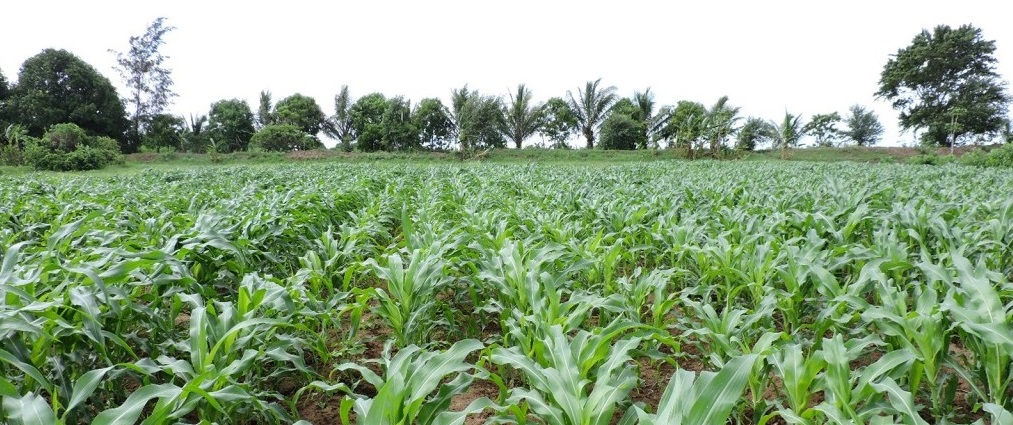
Farmers across West Nile describe the same change: the rains start later than they used to, stop earlier, and fall harder when they come. Whatever the long-run climate record shows, the practical planning problem is the same, and the response is soil and water management rather than new equipment.
Cover the soil
Bare soil between plants loses water to evaporation, heats up, crusts over, and washes away in heavy rain. Covering it is the highest-return change most smallholders can make.
- Mulch with crop residues, grass or leaves. It holds moisture, suppresses weeds, keeps the soil cooler and breaks down into organic matter.
- Leave residues rather than burning them. Burning destroys the organic matter the soil needs and leaves it exposed.
- Plant cover crops such as beans, cowpeas or lablab between seasons. They cover the ground and fix nitrogen.
A mulched field stays workable through a dry spell that would otherwise set a crop back weeks.
Plant on the moisture, not the date
Planting on a fixed calendar date fails when the rains shift. Better practice is to plant when the soil is genuinely wet to planting depth after two or three good rains, not after the first shower.
Planting after one early shower that is followed by a dry fortnight is the most common way a season is lost, because the seed germinates and then dies. Waiting a week costs less than replanting.
Stagger planting across two or three weeks rather than putting everything in on one day. If a dry spell hits, it hits one portion rather than the whole field.
Do not bet the season on one crop
- Intercrop. Maize with beans, sorghum with cowpeas. If one fails, the other may not, and legumes add nitrogen.
- Keep drought-tolerant staples such as sorghum, millet and cassava in the mix, even when maize prices look better. They are the household's insurance.
- Rotate. Following a cereal with a legume breaks pest cycles and restores nitrogen.
Hold water on the land
- Plant across the slope, not up and down it. Rows along the contour slow run-off instead of channelling it.
- Dig trenches or plant grass strips on contours on sloping ground, so heavy rain soaks in rather than carrying soil away.
- Plant basins. Small pits holding manure and seed concentrate scarce water at the root, and work well for maize and sorghum in a dry start.
Put trees back
Trees in and around fields shade the soil, hold it in place, produce fruit, fodder and fuel, and improve the microclimate. Nitrogen-fixing species can be pruned and the leaves used as green manure.
Trees take years to pay back, which is why they are always postponed and why the fields that have them are visibly better. Plant a few every season rather than waiting for a season when you can plant many.
Improve the soil before buying inputs
Fertiliser applied to soil with no organic matter and no moisture retention is largely wasted. Compost and manure first, then consider inputs. Where a household is choosing between buying fertiliser and building a compost heap, the compost is the better first investment.
Which change should I make first?
If you can only do one thing this season, mulch. It costs nothing but labour, it works immediately, and it makes every other practice more effective. If you can do two, add an intercropped legume.
What about improved seed?
Improved and drought-tolerant varieties help, but only in soil that holds moisture. Buying certified seed for degraded, uncovered soil produces disappointment and a conclusion that the seed was fake. Fix the soil first, then the seed is worth paying for. Buy from a registered stockist and keep the receipt.
IDPN supports smallholder farmers in West Nile on climate-smart practice and improved planting material. Contact the office if a farmer group in your area wants to work on this together.