
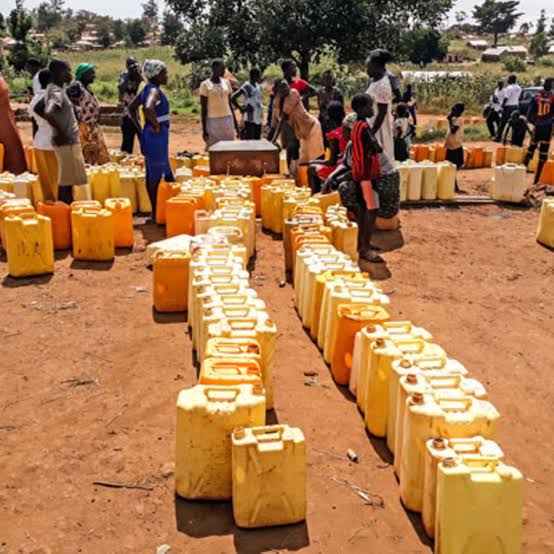
Water that was safe at the source is frequently unsafe by the time it is drunk. Treatment at home closes that gap, and so does how the water is stored.
Boiling
Bring water to a rolling boil, then let it cool covered. A rolling boil is enough; extended boiling wastes fuel without adding protection.
Advantages: kills bacteria, viruses and parasites reliably. Needs nothing you must buy in a shop.
Limits: uses fuel, which costs money or time gathering firewood. Does not remove chemical contamination, sediment or salinity. Offers no protection once cooled, so boiled water stored badly becomes unsafe again.
Chlorination
Chlorine solution or tablets, sold widely in Uganda under several brand names. Add the stated dose for the volume, stir, and wait the stated time, usually about 30 minutes, before drinking.
Advantages: cheap, needs no fuel, and importantly leaves a residual that keeps protecting the water while it is stored. That residual is the main reason to prefer it for stored drinking water.
Limits: less effective in cloudy water, so filter or settle turbid water first. Does not kill some parasites. Some people dislike the taste, which is the usual reason households stop using it. Doses must be measured, not guessed.
Filtration
Ceramic filters, biosand filters and cloth pre-filtering.
Advantages: removes sediment and, with a good ceramic filter, most bacteria and parasites. No taste change, no recurring cost once installed.
Limits: a cloth alone removes visible dirt but not organisms, so it is a pre-treatment rather than a treatment. Filters need regular cleaning and eventually replacement. Most do not reliably remove viruses.
Solar disinfection
Clear plastic bottles filled with clear water, laid in direct sun for at least six hours. Free, and effective against many organisms.
Limits: needs clear water and strong sun, takes most of a day, and produces small quantities. Useful as a fallback, not a household's main method.
Which should a household use?
For most rural households in Uganda: settle or filter turbid water first, then chlorinate for storage, and boil when someone in the household is ill or when there is a cholera or typhoid warning. Chlorine's residual protection is what makes it the better routine choice; boiling is the better response to a known outbreak.
Safe storage, which matters as much as treatment
- Store in a covered container. An open pot recontaminates within hours.
- Use a container with a narrow neck or a tap, so hands and cups never go in.
- Pour rather than dip. Dipping a cup is the single commonest recontamination route.
- Wash the container with soap regularly, and rinse jerrycans properly rather than just refilling.
- Keep drinking water separate from washing water, and label or position them so children do not confuse them.
How do we know if the water is causing illness?
Repeated diarrhoea in a household or a cluster of cases among neighbours who share a source is the practical signal. Children under five are affected first and worst. If several households using one source have sick children in the same period, treat the source as suspect, report it to the water committee and the health centre, and treat all drinking water until it is checked.
What treatment does not fix
None of these methods removes salinity, fluoride, or high iron. Boiling actually concentrates them slightly. Where water has a persistent metallic or salty taste, that is a source problem requiring the district water office, not a household one.